
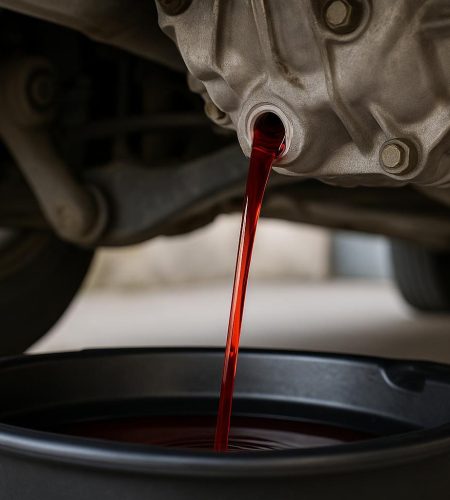
A vehicle’s transmission is a complex and expensive assembly, and its proper operation is critical to comfort, performance, and overall longevity. Changing the transmission fluid is often labeled by automakers as routine maintenance, yet in practice, the approach varies significantly depending on the brand, transmission type, and operating conditions.
Some manufacturers specify “lifetime” fluid, claiming it will last for the vehicle’s entire service life, while others recommend strict service intervals. In reality, the situation is more nuanced.
Why Transmission Fluid Needs to Be Changed
Every transmission – manual or automatic – operates under constant friction. Gears, bearings, synchronizers, clutches, valve bodies, belts, and CVT chains generate heat and interact directly with the fluid. This fluid not only lubricates components but also dissipates heat, protects against wear and corrosion, and, in automatic transmissions and CVTs, serves as a hydraulic medium to transmit torque.
Over time, fluid loses its key properties. Additives break down, and wear particles, such as bronze, brass, friction material, and metal shavings, accumulate. The fluid darkens, may foam when overheated, and changes in viscosity. If not replaced, the shift quality gradually declines, leading to jerking, grinding noises, and even a burnt smell. According to service specialists at Autoland Jax, a used vehicle dealership in Jacksonville, FL, neglected transmission fluid is one of the most common causes of avoidable drivetrain issues in pre-owned cars. Long-term neglect inevitably accelerates wear and leads to costly repairs.
Different Transmission Types and Their Maintenance Needs
Modern vehicles use several transmission types, each with specific maintenance requirements.
Manual transmissions are relatively simple. They use gear oil, typically 75W-90 or 80W-90 with a GL-4 rating, to lubricate gears and synchronizers. These oils contain milder additives to protect non-ferrous metals in synchronizers.
Automatic transmissions are more complex. They rely on Automatic Transmission Fluid (ATF), which functions both as a lubricant and as a hydraulic fluid within the torque converter and valve body. ATF must remain clean and meet precise viscosity and specification standards. Any deviation can quickly lead to shift delays, slipping, or overheating.
Continuously Variable Transmissions (CVTs) use a belt or chain running on variable pulleys. They require specialized CVT fluid with a unique additive package. Using standard ATF in a CVT can cause belt slippage and rapid component failure.
Automated manual transmissions, including DSG and DCT systems, combine mechanical components with electronic control. Many use two separate fluid circuits—one for the mechatronics unit and another for the clutches. These systems have strict fluid requirements; incorrect fluid can cause mechatronic faults and expensive damage.
The transmission type determines both the correct fluid and service interval. Using the wrong fluid or delaying replacement can result in repair costs far exceeding the cost of routine service.
Symptoms It’s Time to Change the Fluid
Service intervals aren’t the only guide – your transmission often provides warning signs. One of the most obvious is a burnt odor, indicating overheating and potential degradation of internal friction materials.
In automatic transmissions, symptoms include jerking, hard shifts, delayed engagement, hesitation, or poor acceleration response. These issues may stem from degraded fluid or contamination in the hydraulic system. In manual transmissions, early signs include difficult shifting, grinding, and unusual noise.
Fluid condition also provides clues. Darkened fluid with metallic particles is a warning sign. While a small amount of fine metal shavings is normal, excessive debris suggests internal wear. Foam or bubbles may indicate incorrect fluid or degraded properties.
Some vehicles will trigger a transmission warning light, signaling overheating or hydraulic system faults. Any of these signs should prompt immediate attention.
Checking Fluid Condition at Home
You don’t always need a service visit to assess fluid condition. If your vehicle has a dipstick, warm the transmission to operating temperature, park on level ground, engage the parking brake, and check the fluid level and color. Fresh ATF is typically clear or lightly tinted and free of unusual odors.
Slight darkening without a burnt smell is usually acceptable. However, a burnt odor or visible particles indicate a problem.
If there is no dipstick, as in many modern vehicles, fluid must be checked via an inspection plug or with diagnostic equipment. In these cases, professional service is recommended.
When draining fluid, pay attention to odor, signs of emulsion (which may indicate water or coolant contamination), and metal debris. This quick check can help determine whether additional service is needed.
Cost and Value of Fluid Changes
Replacing transmission fluid is significantly less expensive than repairing or replacing a transmission. A typical fluid service, including filter and gasket replacement, generally costs a few hundred dollars, while major transmission repairs can run into the thousands.
Repairs for DSG mechatronics or CVT belt systems are especially costly.
Beyond cost savings, regular fluid changes improve shift quality, can enhance fuel efficiency, and reduce the risk of sudden transmission failure. From a financial standpoint, it’s one of the most cost-effective maintenance services you can perform.