
Mehariw Gelagay is a Portland-based real estate professional and business owner whose work includes property management, residential care operations, and real estate brokerage services in Oregon and Washington. Through Mehari Properties Inc., he oversees multi-unit and single-family rental properties, including maintenance coordination, tenant relations, and financial operations. His experience managing housing assets and supporting buyers and sellers in a competitive market provides practical insight into the challenges property owners face when routine cosmetic updates are no longer enough to maintain reliable performance. In addition to his work in real estate, Gelagay serves as executive director of RoyalCare Inc., a residential care facility for adults with intellectual and developmental disabilities. His professional background also includes teaching marketing courses at the University of Gondar in Ethiopia.
When a Rental Property Needs More Than Surface Updates
A rental property can look better after fresh paint, new cabinet handles, patched walls, or updated light fixtures. Those surface updates can improve first impressions and help a unit feel cleaner and more current. Still, surface work has limits when the same condition, leasing, or maintenance problem keeps affecting a unit’s livability. At some point, an owner may need to move beyond appearance-focused work to keep the property reliable and rentable.
Surface updates work best when the property’s basic systems are still performing as they should. Paint, cleaning, and minor finish replacement can help a sound unit show well during turnover. The purpose is to present the unit clearly, not to cover a problem that still affects daily use.
One warning sign is repetition. If the same stain returns, the same flooring area keeps lifting, or the same leak-damaged area needs patching again, the owner may be seeing a problem that needs more attention. Repeated fixes often show that the visible flaw is only the surface sign of a deeper issue. Another quick refresh may hide the problem briefly without solving it.
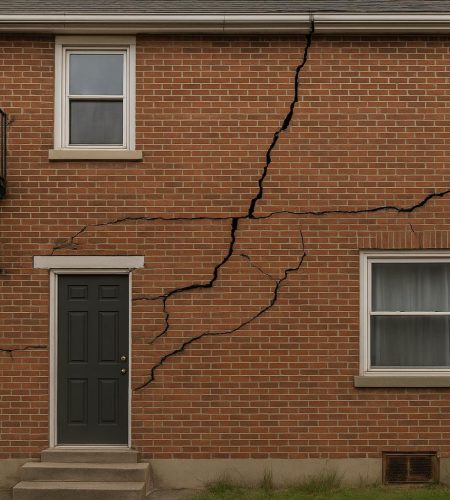
Hidden problems often develop through building conditions that worsen over time. A moisture mark may trace back to a slow plumbing leak, weak ventilation, roof damage, or water entering around a window, roof edge, or exterior opening. Older components can also wear down and affect comfort or function before the failure looks dramatic.
Maintenance calls can also change the decision. A property that generates frequent work orders, repeated call-backs, or steady small repairs is hard to stabilize through piecemeal fixes alone. Even when each repair seems modest, the combined pattern can show that the building needs more than a basic refresh. That is usually when an owner should review deeper repair needs.
The tenant experience adds another useful signal. Tenants may live with uneven temperatures, recurring odors, noisy equipment, sticking windows, weak ventilation, or repairs that interrupt the same routine. An owner does not have to treat every complaint as proof of a major serious problem, but consistent reports about comfort, usability, or reliability can show that the issue affects daily life, not just how the unit looks during a showing.
Leasing results can reveal a related problem from the market side. A unit may photograph well after light updating and still attract weaker interest, lease more slowly, or draw hesitation during showings. If renters compare it with nearby options and question the price, condition, layout, or value, the problem may be broader than cosmetic presentation.
Owners can misjudge costs when they compare one small repair only to the price of a larger project. That short-term comparison can make continued patching feel safer, even when the pattern no longer supports stable performance. A stronger test is whether the cheaper choice reduces future expense, protects the unit, and supports occupancy over time.
A fuller review does not require an owner to overreact or rebuild a dated unit from top to bottom. It means looking at repair history, trouble spots, inspection findings, tenant complaints, and turnover patterns together. That broader view helps an owner decide whether the property needs another refresh, a targeted system repair, or a more durable correction. The goal is to match the repair plan to the pattern, not to start unnecessary construction.
The real advantage comes when an owner recognizes the shift early enough to act with intention. Repairs become easier to prioritize, and the owner can direct resources toward work that improves how the property functions from one turnover to the next.
About Mehariw Gelagay
Mehariw Gelagay is the owner and CEO of Mehari Properties Inc. in Portland, Oregon, where he manages multi-unit and single-family rental properties. He is also a licensed real estate agent in Oregon and Washington and founder of Exceed Real Estate LLC. In addition, he serves as owner and executive director of RoyalCare Inc., a residential care facility for adults with intellectual and developmental disabilities. His background includes teaching marketing courses at the University of Gondar in Ethiopia.