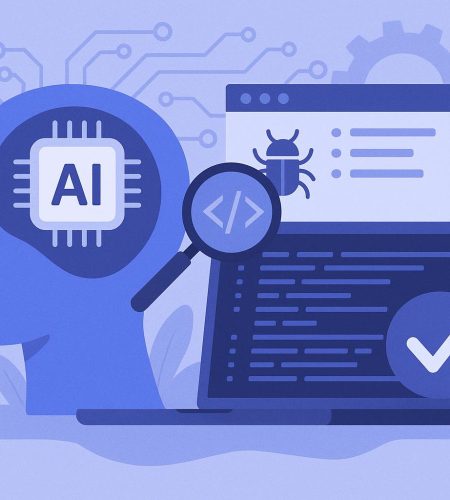
Artificial intelligence is transforming software testing by helping teams create tests faster, identify defects earlier, and reduce repetitive manual work. From generating test cases to analyzing large datasets, AI can significantly improve testing efficiency. However, relying on AI without proper oversight can introduce risks, including inaccurate test coverage, missed edge cases, and compliance issues.
To get the most value from AI-assisted testing, organizations should treat AI as a powerful assistant rather than a replacement for human expertise. This guide outlines practical best practices for integrating AI into your software testing workflow.
Use AI for Repetitive Testing Tasks
One of the most effective uses of AI in software testing is automating repetitive and time-consuming activities. Testers often spend considerable effort creating test cases, updating scripts after UI changes, generating test data, and analyzing test results. AI tools can help accelerate these tasks.
Examples include:
- Generating test cases from requirements and user stories
- Creating and maintaining automated test scripts
- Producing synthetic test data
- Identifying patterns in test failures
- Prioritizing regression tests based on risk
By allowing AI to handle routine work, QA teams can focus more on exploratory testing, business logic validation, and improving overall software quality.
Always Review AI-Generated Tests and Outputs
While AI can generate test cases and testing artifacts quickly, its outputs should never be accepted without review. AI models may misunderstand requirements, overlook critical scenarios, or produce tests that appear valid but fail to verify meaningful functionality.
QA professionals should carefully evaluate:
- Test coverage completeness
- Alignment with business requirements
- Accuracy of expected outcomes
- Relevance of generated assertions
- Potential gaps in critical workflows
Real-world examples demonstrate why verification remains essential. As discussed in this article on Claude for QA Engineers: Use Cases and Limitations, AI-generated testing artifacts can be helpful starting points but may still contain inaccuracies, assumptions, or incomplete coverage that require human validation.
The best approach is to treat AI-generated content as a first draft rather than a final deliverable.
Validate Edge Cases Manually
AI performs best when working with common patterns and well-defined scenarios. However, software defects frequently emerge in edge cases that fall outside typical user behavior.
Examples of edge cases include:
- Unusual user inputs
- Concurrent user actions
- Rare system states
- Localization and language variations
- Boundary conditions
- Error recovery workflows
Because AI may not consistently identify every exceptional scenario, testers should manually design and execute tests that target high-risk edge cases. Human intuition, domain knowledge, and experience remain invaluable for uncovering issues that automated systems may overlook.
Looking Beyond QA: Understanding AI’s Broader Impact
As AI continues reshaping software testing, it’s also transforming numerous other industries and business functions. QA professionals who want to stay ahead of emerging trends can benefit from exploring how AI is influencing fields such as marketing, healthcare, finance, education, and operations.
Resources like NeuroBits AI provide insights into the broader AI landscape, helping technology professionals understand both current developments and future opportunities beyond traditional software testing. Expanding your knowledge of AI across multiple domains can lead to new ideas, better collaboration, and a deeper understanding of how intelligent systems are changing modern organizations.
Maintain Human Oversight Throughout the Testing Process
Successful AI-assisted testing relies on a balanced partnership between automation and human judgment. AI can process information at scale, but it lacks the contextual understanding, business awareness, and critical thinking that experienced testers provide.
Human oversight should remain present during:
- Test strategy development
- Test case review
- Risk assessment
- Defect triage
- Release decision-making
Testing teams should establish clear review processes and accountability measures to ensure that AI-generated recommendations are properly evaluated before influencing production releases.
Organizations that maintain strong human involvement often achieve better outcomes than those attempting to fully automate decision-making.
Monitor Security and Compliance Concerns
AI-assisted testing introduces additional security and compliance considerations. Many AI tools require access to application data, requirements, source code, or testing environments. Without proper controls, sensitive information could be exposed or mishandled.
Best practices include:
- Limiting access to sensitive test data
- Reviewing vendor security policies
- Using anonymized or synthetic datasets whenever possible
- Monitoring AI tool usage and outputs
- Ensuring compliance with industry regulations
- Maintaining audit trails for testing activities
Organizations operating in regulated industries should pay particular attention to how AI-generated artifacts are stored, processed, and shared.
Security and compliance reviews should become a standard component of any AI testing strategy.
Conclusion
AI-assisted software testing offers substantial benefits, including faster test creation, improved efficiency, and better resource utilization. However, achieving these benefits requires a thoughtful approach that combines automation with human expertise.
By using AI for repetitive tasks, reviewing generated outputs, manually validating edge cases, maintaining human oversight, and monitoring security and compliance risks, organizations can maximize the value of AI while preserving software quality and reliability.
The most effective QA teams view AI as an enhancement to human capabilities, not a replacement for them. When used responsibly, AI can help testers work smarter, uncover defects more efficiently, and deliver higher-quality software with greater confidence.