
Key Takeaways
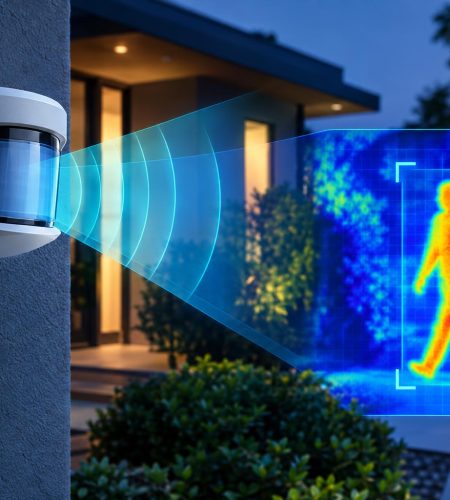
Thermal sensors are revolutionizing motion detection technology by employing infrared mechanisms to sense temperature variations. This significantly enhances reliability and curtails false alarms when compared to older systems. With this technology, the accuracy in capturing human presence greatly increases, allowing for effective surveillance even in darkness.
More and more, pyroelectric detectors have become the go-to technology for motion detection. They convert thermal energy into electrical signals and can issue alerts even with minor temperature shifts. Their incorporation into established security infrastructures has shown success for both homes and businesses alike.
These sensors are particularly adept in terms of range and sensitivity. Capable of detecting movements in total darkness, they drastically lower false alarm rates. This leads to higher satisfaction among industries that adopt the technology.
Thermal sensors extend their utility beyond security applications, playing pivotal roles in smart home technology, energy efficiency monitoring, and predictive maintenance across various sectors, ultimately supporting cost savings and productivity enhancements.
In the healthcare arena, these sensors are instrumental in fever screening and managing patient flow, thus supporting public health initiatives. Within the automotive field, they bolster road safety through advanced driver-assistance systems.
Furthermore, the data gathered from thermal sensors can reveal trends and insights on activity patterns and behaviors, allowing organizations to stress effective resource distribution and maintenance planning.
Looking ahead, advancements in AI and machine learning may further enhance thermal sensors, equipping them with the ability to adapt to various environments and increasingly refine threat detection capabilities. Organizations must begin strategizing for seamless integration with these emerging technologies.
Opening up the Power of Thermal Sensors in Motion Detection
How Infrared Technology Transforms Surveillance Systems
The capabilities unlocked by infrared technology are remarkable. While traditional motion detectors respond to changes in light or movement, thermal sensors focus on temperature variance with pinpoint accuracy. This key distinction is especially valuable in monitoring sensitive areas or potentially hostile environments. What does this mean for security? Professionals indicate that thermal sensors significantly boost situational awareness by delivering accurate, real-time intrusion data.
This technology leverages infrared radiation emitted by various objects, maintaining functionality during the day, at night, and in low-light situations. It enables surveillance systems to detect human presence without the need for visible light sources. As a result, there is a notable decline in false alarms. Thermal sensors can differentiate between human figures and other heat sources, making them indispensable. Gone are the days of wasting resources responding to harmless movements. The urgency for intelligent security systems is undeniable.
“Thermal sensors redefine motion detection accuracy, giving businesses and homeowners peace of mind.”
The Role of Pyroelectric Detectors in Modern Applications
Increasingly, pyroelectric detectors have become a key technology in contemporary motion detection systems. Their design allows for sensing changes in infrared radiation from the environment. By converting thermal energy into electrical signals, they trigger alerts at even the slightest temperature variations. Their adaptability spans from simple home alarms to complex industrial monitoring setups, illustrating their versatility.
When deploying pyroelectric detectors, professionals should assess the layout of the space. Optimizing placement based on the field of view is crucial for maximizing effectiveness. Businesses frequently employ multiple sensors together to widen coverage and enhance reliability. The industry has begun to appreciate how seamlessly thermal detection solutions can fit into existing security setups, thereby improving overall performance. Reflecting on this technology’s potential reveals exciting possibilities.
Comparative Advantages: Thermal Sensors vs. Traditional Motion Detection
Examining the differences between thermal sensors and traditional systems reveals several distinct advantages. Users often express surprise at the capabilities offered by thermal technology. Sensitivity and reliability represent the primary differentiating factors. Traditional sensors depend largely on physical movement, rendering them vulnerable to environmental influences and increasing false alarms.
- Temperature Sensitivity: In detecting temperature shifts, thermal sensors outperform traditional methods that may overlook crucial movements.
- Operational Range: Infrared technology is effective in complete darkness, a major drawback for traditional motion detectors reliant on visible light.
- False Alarm Reduction: Thermal sensors, backed by advanced algorithms, significantly decrease the chances of erroneous alerts.
Applications Beyond Security: Exploring Diverse Use Cases
From Smart Homes to Industrial Solutions: A Game Plan
The applications for thermal sensors reach far beyond traditional security measures. They have become essential components in the realm of smart homes. Professionals frequently advocate for the adoption of these sensors to enhance energy efficiency by detecting heat loss in buildings through thermal imaging. Just picture the potential for cost savings when heat leaks can be identified quickly! Automated lighting, heating, and cooling systems based on occupancy ensure maximum energy efficiency.
The advantages are not limited to residential settings. In manufacturing, for instance, thermal sensors provide critical monitoring for overheating machinery. A spike in temperature could signal impending equipment failure, alerting workers before costly repairs become necessary. This predictive maintenance capability not only enhances productivity but also instills a culture of preventive care, thus minimizing risks.
Innovative Uses in Healthcare and Automotive Industries
In the healthcare sector, thermal sensors play a pivotal role in fever detection. With telemedicine and remote patient monitoring on the rise, accurately gauging body temperature in public spaces has become essential. Hospitals can effectively deploy thermal sensors to manage patient flow, quickly identify infected individuals, and even monitor vital signs. Here, thermal sensors emerge as vital instruments for safeguarding public health.
The automotive industry is similarly evolving. Advanced driver-assistance systems (ADAS) increasingly integrate thermal sensing technology for capabilities like pedestrian detection and night vision. This results in a significant boost to road safety. By analyzing temperature variations, vehicles benefit from the ability to navigate safely, even under low visibility conditions. This could lead to a considerable reduction in accident rates.
Enhanced User Experiences with Thermal Sensor Integration
The introduction of thermal sensors across various sectors signifies a step toward elevated user experiences. When devices interact seamlessly with their surroundings, users notice a positive difference. Imagine a room adjusting its temperature or lighting automatically upon entry. Or a security system that intelligently differentiates between genuine threats and harmless activities, reassuring homeowners. This is where thermal sensor integration excels.
- Home Automation: Smart appliances dynamically respond to user presence.
- Energy Management: Heating and cooling solutions operate efficiently, adapting to user behaviors.
- Interactive Installations: Museums and public venues utilize thermal sensors for engaging visitor experiences.
As technology progresses, these sensors are poised to inspire further innovations that enhance daily living. Smarter solutions that evolve based on individual habits will likely become the norm.
Understanding the Science: Thermal Sensor Mechanics Explained
The Physics Behind Pyroelectric and Thermopile Detectors
A fundamental grasp of how pyroelectric and thermopile detectors function proves vital for anyone delving into this technology. Pyroelectric sensors operate based on the principle of pyroelectricity, generating an electrical charge in response to shifts in infrared radiation. Typically compact and cost-effective, they are ideal for applications in confined spaces.
Conversely, thermopile detectors harness a series of thermocouples connected together, producing a voltage output that measures temperature differentials. This technology boasts greater sensitivity at the expense of complexity. Both variations serve essential roles, depending on specific application needs. Understanding the underlying mechanics greatly enhances implementation efforts and optimizes outcomes.
How Temperature Variations Affect Motion Detection Outcomes
Temperature fundamentally impacts the efficiency of motion detection. When an individual traverses an environment, their body heat generates a unique thermal signature, crucial for detection. The sensor’s ability to recognize this distinct signature is paramount. Additionally, temperature variations can significantly shift detection outcomes, with external elements such as weather playing pivotal roles. Experts emphasize the importance of maintaining optimal conditions for reliable operation.
Another crucial factor is sensor calibration. Regular recalibration of sensors ensures precise readings, fostering better responses in real-time situations. This diligence minimizes false assessments in dynamic environments like schools or offices, where foot traffic fluctuates throughout the day.
Interpreting Sensor Readings: What the Data Reveals
Analyzing data derived from thermal sensors provides invaluable insights. Sensor readings can yield patterns and statistics that help anticipate behaviors, leading to greater efficiency in security and automation. By studying thermal patterns and movements within a space, businesses can discern peak activity periods, influencing staffing or security strategies. Understanding these readings proves vital.
- Identifying Hot Zones: Recognizing where activity predominantly occurs can optimize security resource allocation.
- Activity Patterns: Assessing trends facilitates predictive maintenance in industrial environments.
- Heat Mapping: Visual data representations can highlight inefficiencies in building operations.
This data-centric approach transforms the way environments are monitored and controlled. The potential of thermal sensors reaches beyond mere detection; they empower actionable insights that influence strategic planning.
Future Trends: The Next Frontier in Motion Detection Technology
Emerging Innovations in Thermal Sensor Design and Functionality
The swift evolution of thermal sensor technology indicates exciting possibilities on the horizon. As components shrink and efficiency improves, applications expand significantly. Innovations in design focus on maximizing accuracy while lowering production costs, making thermal sensors increasingly available across various industries.
Consider how this miniaturization trend could lead to the integration of ultra-sensitive detectors into daily objects. The advent of such capabilities might usher in an entirely new era, where personal devices actively monitor surrounding environments without any hiccups. Staying informed about these developments becomes essential for organizations wishing to maintain a competitive edge.
AI and Machine Learning: The Future of Motion Detection?
Integrating artificial intelligence and machine learning is set to further transform thermal sensors. Utilizing these technologies enables sensors to adapt and learn from their environments over time. Advanced algorithms can analyze extensive datasets collected from thermal sensors, facilitating quicker and more accurate threat predictions and responses than ever seen before.
Organizations that embrace AI-driven systems should expect drastically reduced response times and improved threat evaluations. However, blending these advanced systems into existing operations means rethinking organizational strategies to align with the pace of technological advancement. Is the industry geared up for this evolution? Only time can confirm.
Preparing for the Next Wave: Ensuring Compatibility and Integration
The future belongs to the prepared. As technology advances at a speedy rate, ensuring compatibility and integration becomes a crucial endeavor for organizations. Transitioning to thermal sensors demands trust in their adaptability to fit within existing frameworks. This requires dedicating time to research and training staff for effective utilization of these tools.
Moreover, strategizing for interoperability among diverse technologies can yield considerable benefits. Businesses must focus on creating systems that not only work well today but also have the potential to be upgraded as new technologies arise. Such foresight is critical for staying relevant.
- Invest in Training: Ensure that employees are knowledgeable about the technology.
- Stay Updated: Keeping abreast of industry trends will inform which innovations to adopt.
- Build Flexible Systems: Create networks designed to accommodate future advancements smoothly.
Certainly, the upcoming path is ripe with potential. Thermal sensors are expected to advance continually, unveiling new opportunities for various industries to flourish.
FAQ
What are the primary differences between pyroelectric and thermopile detectors?
Pyroelectric detectors convert thermal energy into electrical signals and are often more compact, making them suitable for various applications. In contrast, thermopile detectors gauge temperature differences via multiple thermocouples, offering greater sensitivity but with added complexity.
How can businesses effectively integrate thermal sensors into existing systems?
To successfully integrate thermal sensors, businesses should first analyze the specific monitoring needs and spatial dimensions. Evaluating current security frameworks, along with the strategic placement of sensors, can ensure maximized coverage and efficacy—often deploying multiple sensors for thorough oversight.
What impact do external environmental factors have on thermal sensor performance?
External factors such as humidity, weather conditions, and temperature can greatly influence thermal sensor function. Regular adjustments and calibration based on these environmental variations are essential for maintaining accurate detection and minimizing false readings.
Can thermal sensors be used alongside traditional motion detection systems?
Certainly. Many professionals endorse a hybrid strategy, blending thermal sensors and conventional systems for enhanced security. This dual approach can provide additional reassurance, capitalizing on the respective strengths of both technologies for improved reliability.
How do thermal sensors contribute to energy efficiency in smart homes?
Thermal sensors support energy efficiency initiatives by monitoring heat distribution and occupancy levels within residences. They enable automation of systems like heating and lighting, adjusting them based on real-time occupancy, which helps minimize unnecessary energy expenditure and elevates overall functionality.
What role does data analysis play in optimizing thermal sensor deployment?
Analysis of thermal sensor data can reveal activity trends and patterns in observed areas. This valuable information can assist organizations in refining resource allocation, scheduling maintenance efficiently, and strategically determining where to deploy additional sensors for improved coverage.
Are thermal sensors effective for outdoor surveillance?
Absolutely, thermal sensors excel for outdoor surveillance, particularly in low-light or dark environments. Their ability to detect infrared radiation and temperature discrepancies makes them exceptionally capable of monitoring areas where visibility may be hindered.
What advancements are anticipated in thermal sensor technology?
Future innovations in thermal sensor technology may include advancements in miniaturization, enhanced sensitivity, and improved integration with AI and machine learning. These developments aim to endow sensors with the ability to adapt based on environmental insights, significantly boosting accuracy and enabling intelligent responses to dynamic situations.