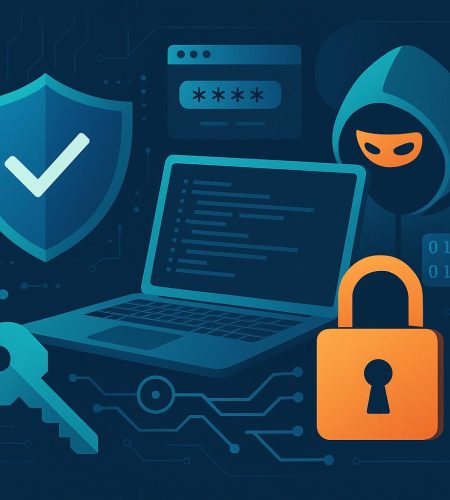
The rise of AI and its influence can be seen everywhere, including cybersecurity platforms. Assessing vulnerability and penetration testing were usually done by ethical hackers and their intuition, intellect, and manual scripting. Going further, they’d scan a network, check for misconfigurations, and constantly try to find a way in. These largely human tasks are quickly giving way to a transformation in that ethical hacking is becoming autonomous.
LLMs, or large language models augmented by intelligent frameworks, have spawned a new kind of security tool. Where they were passive scanners before, now they’re proactive and have the ability to make decisions set within parameters.
AI-Only Security Testing Companies are on the Rise
A new segment within the cybersecurity market is poised to make itself known and become a common thing in the near future- AI-only automated security testing. These vendors leverage a specific type of artificial intelligence that can mimic how a human would use a threat actor’s strategy. The upside is that these models never tire and therefore could operate around the clock. Some of the things these agents could do include launching simulated attacks, identifying exposed assets, and continuously crawling internal and external networks, to name a few.
The idea of an ethical hacker running 24/7 is appealing, even if it’s an AI-only testing program, as it’s more affordable, and they can adjust the frequency. Manual penetration cycles, for example, are reduced from quarterly or annually to weekly or even daily. A more agile process allows the team to identify unpatched vulnerabilities and fix critical issues in hours. In terms of security, the window of opportunity for malicious agents will be smaller.
There is still a need for actual humans to check the work and deliver what AI can’t, namely, creative problem solving, context, and other subtle nuances.
Why Humans Should Still Be in the Loop
Autonomous cybersecurity might sound ideal, but AI should not be a complete replacement for ethical hackers. AI might be better at processing big data, seeing patterns, and executing repetitive tasks, but it doesn’t have creative intuition and contextual understanding.
Furthermore, AI is limited to algorithmic constraints and training data, and wouldn’t be able to handle a subtle flaw in an app workflow that allows unauthorized users to access data, for instance. There’s also the issue of false positives and the potential for destructive actions if they misinterpret a command.
The Sprocket Security Model: A Hybrid Approach
Modern cybersecurity thinkers realize that AI is not sufficient on its own, and doing endless manual testing without human context has its own set of downsides. Providers like Sprocket Security offer a balanced approach to what’s called continuous penetration testing, a process in which hybrid validation frameworks combine humans and AI.
A hybrid model has both elements in a continuous and unified security strategy. The architecture relies on AI engines to handle resource-demanding workloads and monitor for attack surfaces, as well as scan for structural vulnerabilities and identify exposed assets. The moment a bigger anomaly is found, human ethical hackers step in and validate the findings, check for false positives, and use intuition to investigate deeper lateral movements beyond the algorithm. It’s the best of both worlds, namely the speed and scalability of AI and the critical thinking of human experts.
What’s Next for Offensive Security?
Autonomy in the world of ethical hacking is a trend that won’t stop soon. AI tools are becoming more advanced to deal with cybercriminals; Security strategies must adapt and use the latest tools. However, it doesn’t mean that cybersecurity will be run by AI and become fully automated. Embracing both sides that complement each other is the best step forward.