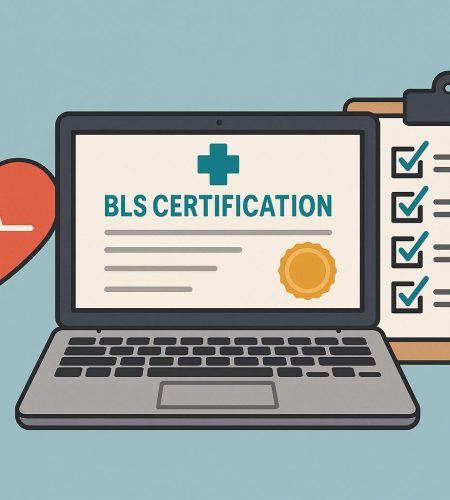
A new job or clinical placement can turn a routine training requirement into a scheduling problem. Searching for bls certification online may help you find a course that fits around work, but the first question is what your employer or school will accept. A convenient format is useful only when it leads to the credential you actually need.
Basic Life Support, commonly called BLS, is associated with training for healthcare professionals and other responders. Course names, assessment methods, and issuing organizations can differ. A little preparation before enrollment can prevent paying for a course that does not match your requirement.
Start With the Requirement, Not the Search Results
Find the exact wording in your onboarding instructions, student handbook, or renewal notice. Look for the required course level, the issuing organization, and any mention of a practical skills assessment. If the wording is unclear, ask the person responsible for checking your documents.
For example, a student may need a particular BLS provider card for a placement rather than a general CPR certificate. Another organization may have a different policy. Similar course titles do not establish that the resulting credentials are interchangeable.
Send the course title and sample card to the appropriate coordinator before purchasing. Ask for written confirmation that the specific course and format satisfy the requirement. Keeping that reply with your enrollment records makes the decision easier to document later.
Also check the deadline for submitting proof, which may fall before your first shift or placement. Work backward from that date and allow time for any separate assessment or administrative review. A course’s advertised study time is not necessarily the full time needed to finish the process.
Separate Online Learning From Skills Assessment
The word online can describe different training arrangements. Some courses deliver instruction and a knowledge test online, while blended programs combine online learning with a separate practical component. Read the completion requirements rather than relying on the headline.
The American Heart Association’s HeartCode BLS blended route includes online learning followed by a hands-on skills session. Its self-guided option also includes a hands-on component at an approved CPR Verification Station. Completing an online knowledge portion alone is therefore different from completing those full training pathways.
Ask who provides any required practical session, where it happens, and whether it is included in the price. If it must be arranged separately, confirm availability before beginning the online portion. This is particularly useful when your deadline is close or local appointments are limited.
Statements about following an organization’s guidelines should also be read carefully. They do not, by themselves, establish who issues the completion card. Verify the issuer directly whenever your employer names a specific training organization.
Compare the Course Outline and Completion Terms
When reviewing bls certification online, compare the syllabus with the requirements you collected. Look for a clear description of the intended audience and the subjects covered. Adult, child, and infant content should be identified where relevant to your role.
A useful course listing explains what you will study and how learning is assessed. It should also make the steps between enrollment and receiving documentation understandable. If those details are missing, ask the provider before committing.
Keep a short comparison checklist beside the course pages. Focus on details that affect your ability to complete the right training on time.
- Who issues the certificate or completion card?
- Does the course include all required learning and skills assessments?
- Are there separate assessment, retake, or card fees?
- How long can you access the lessons and complete the course?
- When and how will you receive the final documentation?
- What support and refund terms apply if a problem arises?
Avoid choosing solely by the lowest advertised fee or shortest completion estimate. Compare the full process, including anything you must book elsewhere. A clear course description gives you a better basis for deciding than a broad claim about acceptance.
Make a Study Plan That Leaves Room for Questions
Once the course is confirmed as suitable, reserve time for learning rather than fitting every lesson between other tasks. Use a quiet setting where you can watch demonstrations and revisit unfamiliar material. Short sessions can work well if you leave enough time to finish before the deadline.
Write down questions as you go, especially when a concept is new or a scenario feels unclear. Use the provider’s support options or raise the questions during the practical component, if your course includes one. Do not treat a passing knowledge score as a reason to ignore uncertainty.
First-time learners and returning learners may need different amounts of study time. Someone renewing after regular training may recognize the material, while a new learner may need more repetition. Plan around your own understanding rather than another person’s completion speed.
Finish With the Correct Records in Hand
Before submitting your documentation, check your name, the course title, the issuer, and any expiration information. Save a readable copy and follow your employer’s or school’s submission instructions. Set a reminder early enough to arrange the next required renewal without rushing.
When comparing providers such as Simple CPR, review the specific course page and confirm its acceptance with the organization requesting your credential. Match the learning format, assessment requirements, and documentation to that organization’s policy before enrolling. That approach keeps a busy schedule from becoming a reason to choose the wrong course.