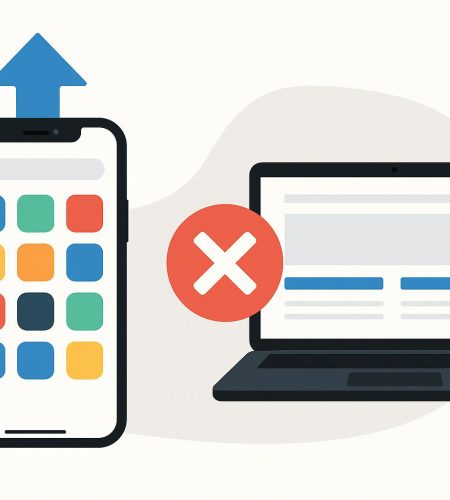
For years, the go-to advice for small businesses entering the digital space was simple: build a website first, worry about an app later. That advice is getting harder to defend in 2026, and a growing number of business owners are skipping the website-first playbook entirely in favor of a dedicated iOS app.
The reason isn’t that websites have stopped working. It’s that customer behavior has shifted far enough that the gap between what a website can deliver and what users now expect has become a business problem.
The Engagement Gap Is Real
Mobile users spend around 90 percent of their smartphone time inside apps, not browsers. A website, even a well-optimized one, competes against that habit every time a customer opens their phone. An app doesn’t have to compete. It’s already there, on the home screen, one tap away.
For service businesses in particular, that difference translates directly into bookings, repeat purchases, and customer retention. A customer who downloads your app is meaningfully more likely to come back than one who bookmarked your website. The friction of opening a browser, typing a URL, and waiting for a page to load is small in isolation, but at scale it adds up to lost revenue.
Why iOS Specifically
Not every business needs to launch on both platforms at once, and many are finding that an iOS-first approach makes more financial sense in the early stages. iPhone users in the US consistently show higher average spending per app and higher engagement rates than the broader Android user base. For businesses targeting premium consumers, local markets, or professional audiences, iOS is often where the highest-value customers already are.
Companies like AppMakers USA have built their practice around exactly this insight, helping small and mid-sized businesses launch focused iOS products rather than trying to be everywhere at once and diluting the result.
What the Investment Actually Looks Like
The perception that app development is only for enterprise budgets has also shifted. The range of what a well-scoped iOS app costs has come down considerably as frameworks and tooling have matured, and the return on that investment for a business with an established customer base tends to show up quickly in retention and repeat purchase metrics.
For businesses curious about what a focused iOS app development engagement actually involves, the first step is usually a scoping conversation rather than a proposal, understanding the core use case before committing to a full build.
The shift is already underway. Small businesses that move early tend to find the app channel less crowded and more effective than the ones waiting to see how things develop.