
Ana Maria Gonzalez-Angulo, MD, is a triple-boarded physician-scientist whose career spans clinical oncology, academic research, and international leadership in breast cancer medicine. With decades of experience across the United States, Latin America, and Europe, Ana Maria Gonzalez-Angulo has contributed significantly to the scientific understanding of breast cancer biology and treatment. She previously served as a tenured professor at The University of Texas MD Anderson Cancer Center, where she worked in the Departments of Breast Medical Oncology and Systems Biology and led important clinical research initiatives. Her work has focused on aggressive breast cancer subtypes, therapy resistance, and translational genomics, helping shape modern approaches to treatment and diagnostics. Through her research collaborations, clinical leadership, and participation in major international research groups, she has also helped advance knowledge about risk factors and disease patterns, including how reproductive factors such as pregnancy may influence long-term breast cancer risk.
Understanding the Relationship between Pregnancy and Breast Cancer Risk
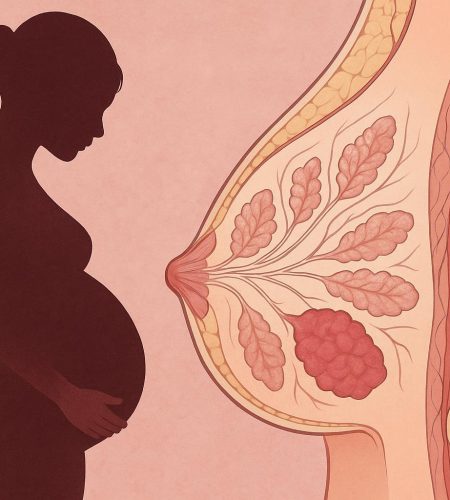
A depth of medical research has demonstrated a relationship between breast cancer risk and pregnancy. The relationship, however, is complicated and is largely defined by two key traits: the age at which a woman has her first child and the number of childbirths she has over her lifetime.
Put simply, the older a person is when she has her child, the greater her risk for later developing breast cancer. Women who give birth for the first time after the age of 30 experience the largest increase in breast cancer risk. On a related note, women who never become pregnant have a high risk of developing breast cancer compared to women who have been pregnant at least once, regardless of whether they experience childbirth. But again, the relationship between pregnancy, childbirth, and breast cancer is more complex than certain statistics indicate.
For example, while a first pregnancy ultimately decreases a woman’s long-term risk of breast cancer, women initially experience a short-term increase in breast cancer risk. The extent of this risk relates to the woman’s age at the time of pregnancy, among other factors, but generally involves an elevated risk for roughly 10 years after the initial birth, followed by a lower risk compared to women who never experience pregnancy.
Having a first child at age 35 or younger can contribute to a decreased risk of breast cancer over time, but giving birth later in life has fewer cancer benefits and can increase a woman’s breast cancer risk. This is because women at this age never experience the long-term decreased risk related to childbirth; in other words, the initial increase of breast cancer risk never goes away. That said, research indicates that the increased risk is less than that experienced by women who never give birth.
The complicated relationship between age, childbirth, and cancer has to do with the rapid cellular growth that occurs during pregnancy. Preexisting genetic damage in breast cells, or damage that occurs early in pregnancy, contributes to this cellular growth, and multiple copies of damaged cells increase breast cancer risk. The older a person gets, the greater the chance their breast tissue features some amount of genetic damage, leading to an overall increased risk of breast cancer for women who become pregnant later in life.
However, repeated pregnancies do not contribute to increased breast cancer risk. In fact, most research indicates that the more times a woman gives birth, the lower the risk of breast cancer becomes. That said, medical professionals associate each pregnancy after the first child with a smaller decrease in risk.
The time between multiple births also influences cancer risk. While researchers do not fully understand the data, studies suggest that repeated births that happen closer together further reduce breast cancer risk, while births that are more spaced out do not lower breast cancer risk as much.
Preeclampsia is a condition characterized by high blood pressure that develops during or after pregnancy. While this condition poses certain health risks, health care professionals have correlated the condition with a decreased risk of breast cancer. The relationship is not clear, but scientists believe that hormone and protein interactions that occur during preeclampsia may offset cancer risk.
Finally, breastfeeding can influence cancer risk. Studies show that breastfeeding for at least one year after birth lowers a woman’s risk of both hormone receptor-negative and hormone receptor-positive breast cancers.
About Ana Maria Gonzalez-Angulo
Ana Maria Gonzalez-Angulo, MD, is a medical oncologist and physician-scientist with more than three decades of experience in breast cancer research, clinical care, and academic medicine. She previously served as a tenured professor at The University of Texas MD Anderson Cancer Center and has published extensively on aggressive breast cancer subtypes, therapy resistance, and molecular diagnostics. She currently leads the Consultores de Oncologia clinical research team and practices as a senior medical oncologist at Unidad de Cancerologia in Mexico.