
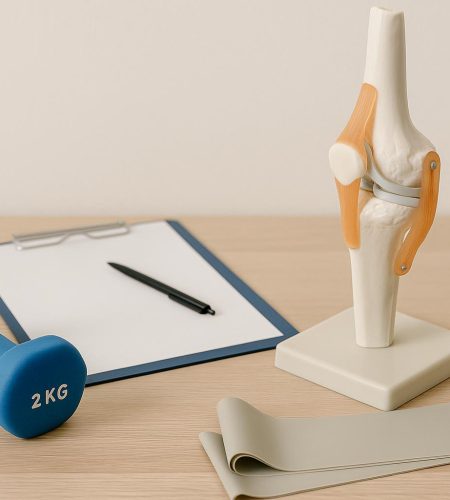
Getting a surgical date for an ACL reconstruction, a rotator cuff repair, or a joint replacement usually brings a mix of relief and anxiety. For many patients in Ottawa, securing that date comes after months of sitting on a waitlist, modifying daily activities, and living with chronic pain.
When you are nursing a torn ligament or severe osteoarthritis, the default reaction is often to protect the injured joint. People tend to limit their movement, stop exercising, and simply wait for the operation to fix the structural problem. But treating this waiting period as passive downtime is a massive missed opportunity that can actually make your recovery much harder.
Instead of waiting, you should be training. This concept is called pre-habilitation, or “pre-hab,” and it is completely changing how we approach orthopedic surgery at Kinoveo Physio.
What Exactly is Pre-Hab?
Think of orthopedic surgery as a massive athletic event. The operation itself is a controlled physical trauma. Tissues are cut, bone is sometimes altered, and your body is forced into an immediate state of high-stress healing. You would never show up to the starting line of a marathon having spent the previous six months on the couch. You shouldn’t show up to the operating room that way, either.
Pre-hab is a targeted physiotherapy program designed to optimize your physical and mental condition before you go under the knife. The goal is not to heal the structural damage, a torn meniscus is still torn, and a worn-out hip joint still needs replacing, but rather to maximize the function of the surrounding muscles and joints so you are as resilient as possible on the day of surgery.
The “Bank Account” of Muscle Mass
The most compelling reason to do pre-hab comes down to basic physiology and muscle atrophy.
After any joint surgery, your body initiates a protective response. Because the area has sustained trauma, your nervous system essentially shuts down the surrounding muscles to prevent you from moving and causing further damage. This neurological inhibition, combined with a period of forced rest, leads to rapid muscle wasting. You can lose a significant amount of muscle mass and strength within the first week after surgery.
Think of your muscle mass as a bank account. Surgery is going to force you to make a massive withdrawal. If your account is already nearly empty because you’ve been limping around and avoiding using your leg for six months, that post-surgery withdrawal is going to put you in the red. Your baseline will be incredibly low, making the climb back to normal function long and grueling.
If you spend the weeks leading up to surgery building strength, you are making deposits into that account. You will still lose muscle after the operation, but because you started from a much higher baseline, you will have plenty in reserve. Patients who participate in pre-hab consistently hit their post-operative strength milestones weeks ahead of those who don’t.
Restoring Range of Motion
There is a well-known rule in orthopedic rehabilitation: a joint that goes into the operating room stiff is going to come out of the operating room stiff.
When a joint is injured, swelling and pain naturally restrict how far it can bend or straighten. Over time, the capsule around the joint tightens, and the surrounding tissues become rigid. Surgeons are excellent at repairing ligaments or replacing cartilage, but they do not fix stiff tissues.
If you lack full extension in your knee before an ACL reconstruction, achieving full extension afterward will be agonizingly difficult. A physiotherapist can use manual therapy techniques and specific mobility exercises to help you regain as much range of motion as mechanically possible before your surgery date, setting a much better foundation for your post-op recovery.
Mastering the Post-Op Protocol Before the Pain Sets In
Day one after surgery is not the ideal time to learn new physical skills. You are likely groggy from anesthesia, dealing with pain, and restricted by heavy bandages or a brace.
One of the most practical benefits of pre-hab is that it gives you a chance to learn the mechanics of your recovery while you have a clear head. We use pre-hab sessions to teach patients crucial early-stage skills:
- Crutch walking and stair navigation: We will size you for crutches and teach you the proper gait patterns, so you aren’t trying to figure it out in the hospital hallway.
- Muscle activation: Learning how to fire a specific muscle, like your quadriceps or glutes, is much easier to master before your knee is swollen to the size of a melon. We teach you the exercises you will need to do on day one, so you already have the neuromuscular connection established.
- Transfer mechanics: How to safely get in and out of a car, a low chair, or your bed without compromising your surgical site.
The Mental Advantage
Finally, surgery is stressful. The fear of the unknown, how much it will hurt, how long the recovery will take, what you will and won’t be able to do, can cause significant anxiety.
Pre-hab removes the mystery. You get a clear roadmap of exactly what the next six to twelve months are going to look like. You establish a relationship with your physiotherapist beforehand, meaning that when you come in for your first post-op appointment, you are working with someone who already knows your body, your baseline, and your goals. You transition from being a passive patient waiting for a fix, to an active participant in your own recovery.
If you have a surgery date on the calendar, don’t spend the weeks leading up to it just sitting on the couch. Reach out to the team at Kinoveo. Let’s use that time to build your physical reserves and make your recovery as smooth as possible.